10 Days in Morocco: Dust, Tea, Blue Walls, and a Lot of Driving
I spent ten days on a road trip through Morocco, and the truth is simple: it was intense, beautiful, tiring, chaotic at times, and absolutely worth it.
This was not one of those “life-changing spiritual journeys” people love to write about after sleeping one night in the desert and drinking tea under the stars. This was a real road trip. Long drives. Wrong turns. Roads that looked shorter on the map than they felt in real life. Cities full of noise. Quiet places that suddenly stopped you in your tracks. And, of course, the constant internal debate of whether I should enjoy the moment or stop again for another photo.
My route took me through Ouarzazate, Merzouga, the Sahara Desert, Ait Ben Haddou, the High Atlas Mountains, Marrakech, Casablanca, Fez, Chefchaouen, and Tangier. In just ten days, Morocco gave me desert landscapes, mountain roads, old kasbahs, busy medinas, Atlantic views, and enough visual contrast to fill more memory cards than I probably needed.
Ouarzazate: where the road trip really started feeling real
Ouarzazate felt like the perfect start. Dry landscapes, earthy colors, strong light, and that feeling that everything around you belongs in a film set. Which makes sense, because it often does.
It is one of those places where the scenery does half the work for you as a photographer. The tones are already there. The shapes are already there. You just need to not mess it up.
Merzouga and the Sahara: yes, it is impressive, even if that sounds obvious
Then came Merzouga and the Sahara Desert overnight experience, and yes, the dunes are as good as people say. That part is not overrated.
What nobody really tells you enough is that sand gets everywhere, moving on dunes is more work than it looks, and once you think you found the perfect clean composition, there will probably be footprints exactly where you did not want them. Real desert photography.
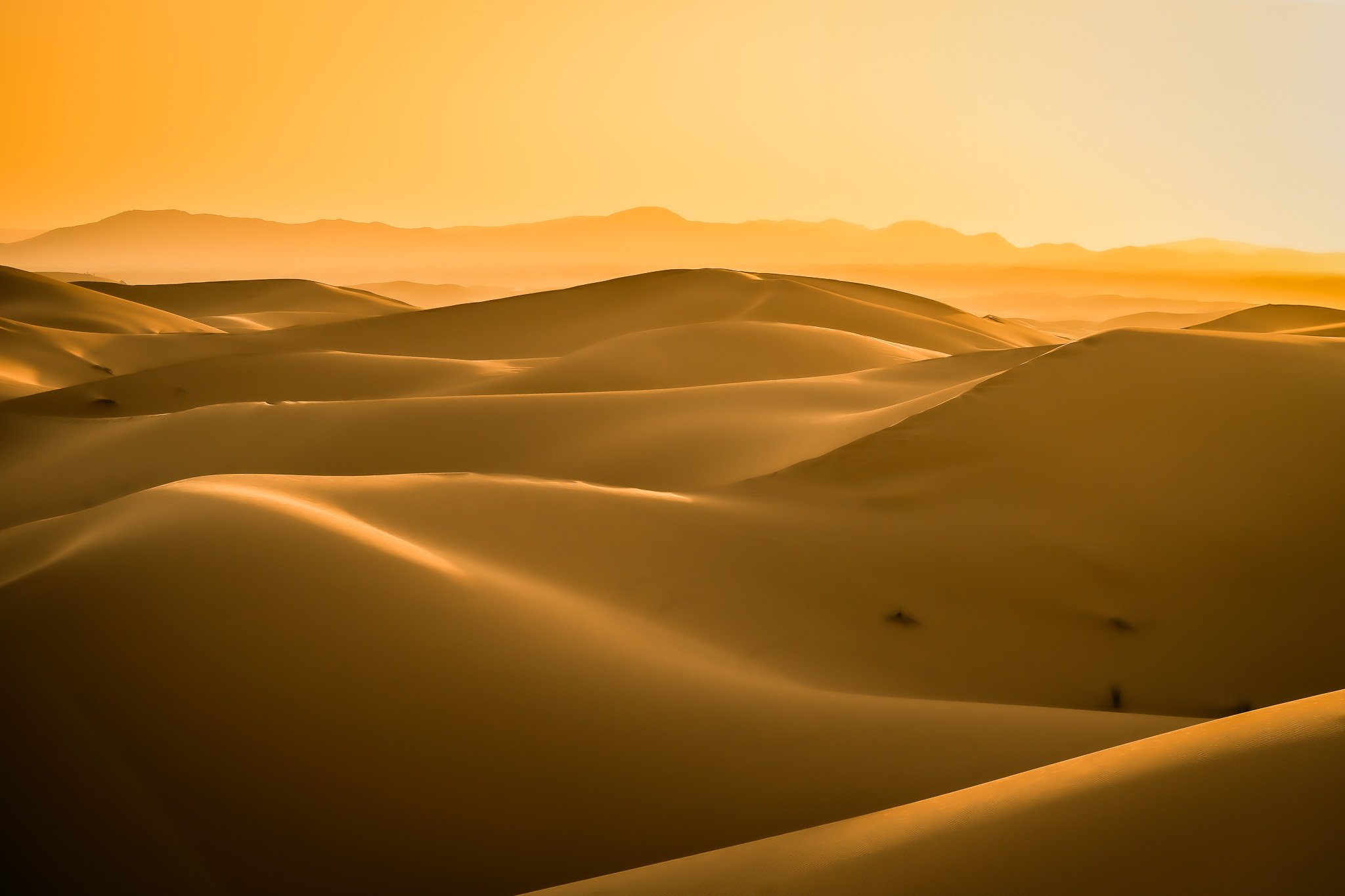
Still, spending a night in the Sahara was one of the highlights of the trip. The light changes constantly, sunrise and sunset actually deliver, and the emptiness of the landscape does something very good for photography. It strips things down. Shape, shadow, texture, line. Nothing extra.
And no, I did not come back pretending I found myself in the dunes. I found sand in my shoes, my clothes, and probably still in my bag. That’s more honest.
Ait Ben Haddou: one of those places that actually looks as good in person
Some places are over-photographed and then disappoint you in real life. Ait Ben Haddou is not one of them.
It is one of the most photogenic places in Morocco for a reason. The layers of mud-brick buildings, the warm tones, the textures, the way the light hits the walls late in the day — it works. It really works.
It also has that rare quality of feeling cinematic without looking fake. You walk around with your camera and understand immediately why so many people stop here. It is not subtle, but it is good.
The High Atlas: curves, views, and the kind of road that keeps you awake
Crossing the High Atlas Mountains was one of the best driving sections of the trip. Great views, dramatic terrain, changing weather, and roads that demanded full attention.
This is not the place to drive half asleep thinking it will be a relaxed scenic cruise. It is scenic, yes. Relaxed, not always.
But visually, it is one of the strongest parts of a Morocco road trip. The landscapes keep changing, and that shift between desert, mountain, and city is one of the things that makes this itinerary so good.
Marrakech: beautiful, intense, and not exactly quiet
Then came Marrakech, which is many things, but calm is not one of them.
It is colorful, busy, chaotic, energetic, and sometimes exhausting. Which is part of the point. Marrakech throws everything at you at once. Traffic, people, colors, sound, movement. If you like clean silence, it may test your patience. If you like visual overload, it gives you plenty to work with.
For photography, it is a city that rewards attention. Not every shot has to be a famous landmark. Sometimes it is the texture of a wall, the light in a courtyard, a street corner, or a moment of order inside the chaos.
Casablanca: more than a stop, less than a fantasy
Casablanca is not the dreamy Morocco postcard many people imagine before going. And that is exactly why it is interesting.
It feels more modern, more direct, less staged for tourists. The Hassan II Mosque is obviously the big visual moment, and it is impressive. Massive, dramatic, sitting right by the ocean like it knows exactly how photogenic it is.
The rest of the city felt more grounded, more everyday, more real. I appreciated that.
Fez: beautiful, confusing, and very capable of making you question your sense of direction
Then there is Fez, where I think every visitor eventually accepts one fact: you are going to get lost.
Not “a little turned around.” Properly lost.
But that is also part of what makes it one of the most memorable cities in Morocco. The medina in Fez is dense, old, alive, complicated, and full of visual detail. Doors, courtyards, narrow streets, textures, workshops, light coming in from impossible angles.
It is one of the best places on the trip for street and travel photography, as long as you stay patient and accept that your route may not make any sense.
Chefchaouen: yes, it is blue, but that is not the whole story
Chefchaouen is famous for the blue streets, blue walls, blue doors, blue corners, blue everything. That part is true.
But what I liked most was not just the color. It was the way the town changes depending on the light, the quieter corners away from the obvious photos, and the fact that it can feel peaceful one minute and full of people the next.
It is photogenic, no question. But the challenge there is doing something beyond the standard shot everyone already takes.
Tangier: the ending that felt right
Finishing in Tangier made sense. After desert roads, mountain passes, old cities, and crowded medinas, arriving at the coast again gave the trip a different rhythm.
Tangier feels like a transition point. Between Africa and Europe. Between old and new. Between staying and leaving. It has energy, but also space to breathe. A good place to end a road trip that gave me a bit of everything.
What this Morocco road trip really felt like
In ten days, Morocco gave me a lot:
desert photography, mountain landscapes, historic architecture, blue city streets, medina chaos, road trip fatigue, strong coffee, mint tea, and far too many reasons to stop the car for “just one quick photo.”
That last part is never true, by the way. It is never one quick photo.
What I like most about this trip is that it did not feel polished. It felt real. Morocco is visually powerful, but it is not a place that hands itself to you in a perfect, clean way. Sometimes it is messy. Sometimes it is loud. Sometimes it is tiring. That is part of why it is good.
And for me, that is better than romanticizing it.
New Morocco fine art prints are now available
This road trip also brought a new collection of Morocco fine art photography prints to the website. I’ve added new work from the Sahara Desert, Ait Ben Haddou, Marrakech, Fez, Chefchaouen, and other stops along the route.
So if you want to see the new photographs, this is the moment.
You can now check the new Morocco prints on the website and find pieces that bring the textures, colors, architecture, and landscapes of this trip into your home.
Coming next: see the new prints at my next Street Fair
I’ll also be bringing these new Morocco prints to my next Street Fair, so if you want to see the work in person, that will be the first chance.
Original prints, wall art, photo books, greeting cards, and new Morocco photographs will be part of the display.
If you already follow my work, come by and say hi.
And if you have been thinking about buying one of my pieces, this new Morocco series might be a good place to start.
You can check the new prints now on the website, and then come see them in person at the next Street Fair.